
Drum audio to MIDI · 2026 workflow
Drum transcription: use transient triggers, not a melody pitch converter.
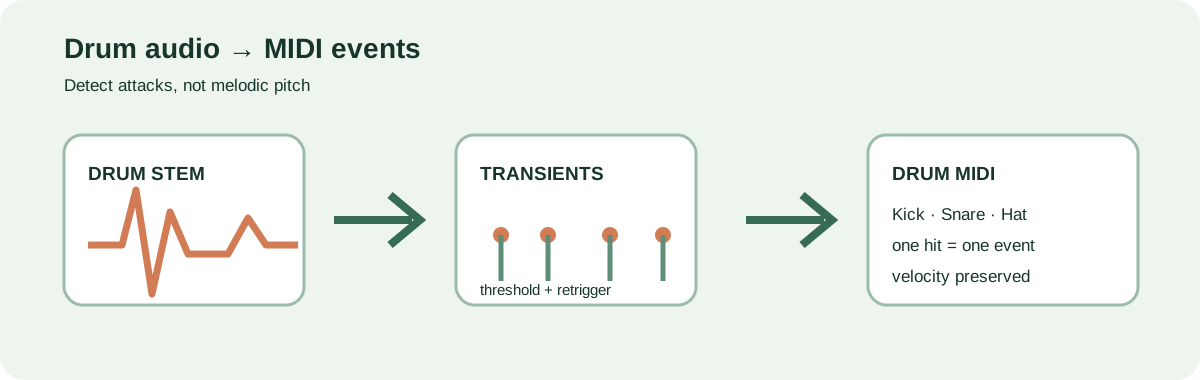
Isolate the drum stem, clean the noise around each hit, create one MIDI event per transient, and then check missed hits, double triggers, bleed, and velocity. A pitch-to-MIDI melody tool is the wrong first step because a kick or snare is not a pitched melody line.
The short answer
Why the usual audio-to-MIDI promise breaks on drums
Pitch transcription asks “what note is sounding?” Drum transcription asks “when did a hit happen, and which drum produced it?” A kick, snare, and hi-hat can have noisy or inharmonic spectra, so feeding a full drum loop into a melody detector can produce missing events or meaningless pitches.
Local MIDI's browser converter is intentionally a lightweight monophonic pitch estimator. It is useful for a clear melodic line, not a drum replacement workflow. For drums, use a transient-to-MIDI function in your DAW or drum-trigger tool, then review the resulting note events against the audio.
Step 1
Give the trigger one job
Isolate the drum part
Start with a close kick, snare, hat, or drum stem. If the source is a full mix, separate the drum stem before triggering; bass and guitars can create false attacks.
Reduce the noise floor
Trim silence and tame room noise without chopping the attack. A gate that closes too quickly can erase a quiet hit; one that stays open can create extra triggers.
Trigger one lane at a time
Use separate trigger settings for kick, snare, and hats. Their level, decay, and overlap are different, so one threshold rarely fits every drum in a mixed loop.
Step 2
Map the detected hits to a drum lane
| Source | What to listen for | MIDI decision |
|---|---|---|
| Kick | Low attack plus the beginning of the decay; ignore sustained sub rumble. | One kick note per real attack, with velocity following the hit level. |
| Snare | Separate the transient from the room tail and cymbal bleed. | Keep the backbeat hits; remove triggers caused by reverb or a nearby kick. |
| Hi-hat | Short, repeated transients and the difference between closed and open tails. | Use distinct closed/open lanes when the source actually supports that distinction. |
| Full drum stem | Overlapping hits and simultaneous transients from different drums. | Split into useful lanes first; one generic trigger lane hides which drum was detected. |
This is an event map, not a measured accuracy ranking. The useful question is whether each MIDI hit corresponds to an audible drum attack.
Step 3
Audit four drum-specific failure modes
- Missed hits: lower the trigger threshold only until quiet real attacks appear; then check that the noise floor did not become MIDI.
- Double triggers: increase the minimum retrigger interval when one kick or snare creates two note-ons.
- Bleed: compare the trigger lane with the isolated source and delete events caused by another drum or a room reflection.
- Velocity flattening: keep the loud/soft pattern if the performance matters; remap velocities only after the event count is trustworthy.
These checks are different from a pitched-note accuracy score. They describe whether the MIDI can drive a drum sampler without forcing you to redraw the groove.
Step 4
Export only after the groove survives playback
Mute the original drum audio and play the MIDI through a drum kit. Listen for the same accents, ghost notes, and open/closed hat changes. Then bring the audio back in and correct any hit that lands early, late, or on the wrong drum lane. Export the MIDI only after the replacement kit follows the source without a second pass of manual drawing.
If you actually need a vocal, bass, or lead melody converted, use the local browser audio-to-MIDI converter for a clean single-note source instead.
Bottom line
How to convert drums to MIDI: use a trigger workflow
Separate the drum, preserve the transient, map one hit to one drum lane, and audit the four failure modes before calling the MIDI finished. That workflow answers the drum-track question without pretending a melody pitch detector can identify every percussion event.